


Macro chokepoints: How geographical determinism controls everything

Macro chokepoints: How geographical determinism quietly controls the economy
An NBC News headline this week reads:

Here’s the crude oil chart so you can see the volatility the journalist refers to:

The price of oil is arguably the single most important price in the world.
Because when oil gets more expensive, so does everything else.
Fuel, freight, fertilizer, food — and those are just four items starting with the same letter, but all of them are deeply connected and critical to daily life pretty much everywhere in the world.
So why the volatility?
With conflict breaking out in the Middle East this month, Iran closed the Strait of Hormuz, a narrow sea passage separating the Gulf of Oman and the Persian Gulf.

This closure triggered a supply squeeze; about 20% of the world’s oil and petroleum shipments pass through the strait.
The supply squeeze triggered a price increase (which OPEC is now trying to arrest by releasing reserves into the market).
The price increase has already led to downstream economic effects worldwide.
Depending on where you’re reading this, you might already have felt them.
But while oil is always going to grab the mainstream headlines at times like this, there was a less visible supply squeeze that caught my attention.
Marty Bent’s excellent Bitcoin Brief on March 3 ran the following headline:

It caught my attention for two reasons.
First, who knew Qatar possessed helium, let alone controlled enough of it to significantly threaten the world’s largest chip fabricators? Not me.
Second, what other uniquely tight macroeconomic chokepoints exist in today’s world?
While the Strait of Hormuz and oil dominates the headlines right now, there are actually many cases of ‘geographic determinism’ which we’d never normally think about (until it’s too late).
These are situations in which a nation’s or region’s location happens to give it huge leverage in particular commodity markets.
So here’s the top 10 cases in which control of vitally important minerals, gases, raw fuels and refinery facilities is ultra-concentrated — in descending order.
#1: Heavy Rare Earth Elements (HREEs)

What it is/does: These chemical elements, such as dysprosium and terbium, are critical for creating high-strength permanent magnets that maintain their magnetic properties at the extreme temperatures found in modern engines.
Level of control: 99% of global chemical processing and separation is centralized in China. While other nations mine these elements, China holds a near-total monopoly on the refining infrastructure required to turn ore into industrial-grade material.
Main buyers: Drivetrain motors for electric vehicles, high-performance wind turbines, and advanced defense systems.
Key buyers: Major EV manufacturers (Tesla, BYD), renewable energy firms, and defense contractors like Lockheed Martin.
#2: Gallium

What it is/does: A soft metal that, when combined with nitrogen or arsenic, creates semiconductors that are significantly more efficient than silicon at handling high-frequency signals and high voltages.
Level of control: 98% of global primary production is controlled by China. Following the 2024-2026 export restrictions, Western supply has become extremely fragile, relying heavily on limited domestic recycling.
Main buyers: 5G base station transmitters, advanced AESA radar systems for fighter jets, and fast-charging power adapters.
Key buyers: Telecommunications giants (Ericsson, Nokia), aerospace firms (Raytheon, Northrop Grumman), and consumer electronics OEMs.
#3: High-Purity Quartz (HPQ)

What it is/does: This ultra-pure natural mineral is the only material that can be fused into the silica crucibles used to grow the monocrystalline silicon ingots required for computer chips.
Level of control: 90%+ of the world's highest-grade natural HPQ originates from two mines in Spruce Pine, North Carolina. There are virtually no other natural sources on Earth that meet the purity levels required for advanced semiconductor manufacturing.
Main buyers: Manufacturing the ‘master vessels for all semiconductor and high-efficiency solar wafer production.
Key buyers: Global semiconductor foundries (TSMC, Intel, Samsung) and the world's largest solar cell producers.
#4: Niobium

What it is/does: A transition metal used as a ‘micro-alloying’ agent; adding a tiny fraction of niobium to steel dramatically increases its strength, toughness, and resistance to extreme heat.
Level of control: 90% of global production is controlled by Brazil, with the Araxá mine alone providing 75% of the world's total supply.
Main buyers: High-strength low-alloy (HSLA) steel for jet engines, automotive frames, and large-scale industrial pipelines.
Key buyers: Jet engine manufacturers (GE, Pratt & Whitney), automotive OEMs focused on lightweighting, and global infrastructure firms.
#5: Cobalt

What it is/does: A dense metal that acts as a stabilizing agent in battery cathodes, allowing them to store more energy safely without overheating or catching fire.
Level of control: 74% of global supply is mined in the Democratic Republic of the Congo (DRC). Furthermore, 80% of the global refining capacity for this cobalt is located in China.
Main buyers: Cathodes for lithium-ion batteries in electric vehicles and mobile devices.
Key buyers: Battery cell manufacturers (CATL, Panasonic, LG Energy Solution) and major tech firms (Apple, Tesla).
#6: Nickel
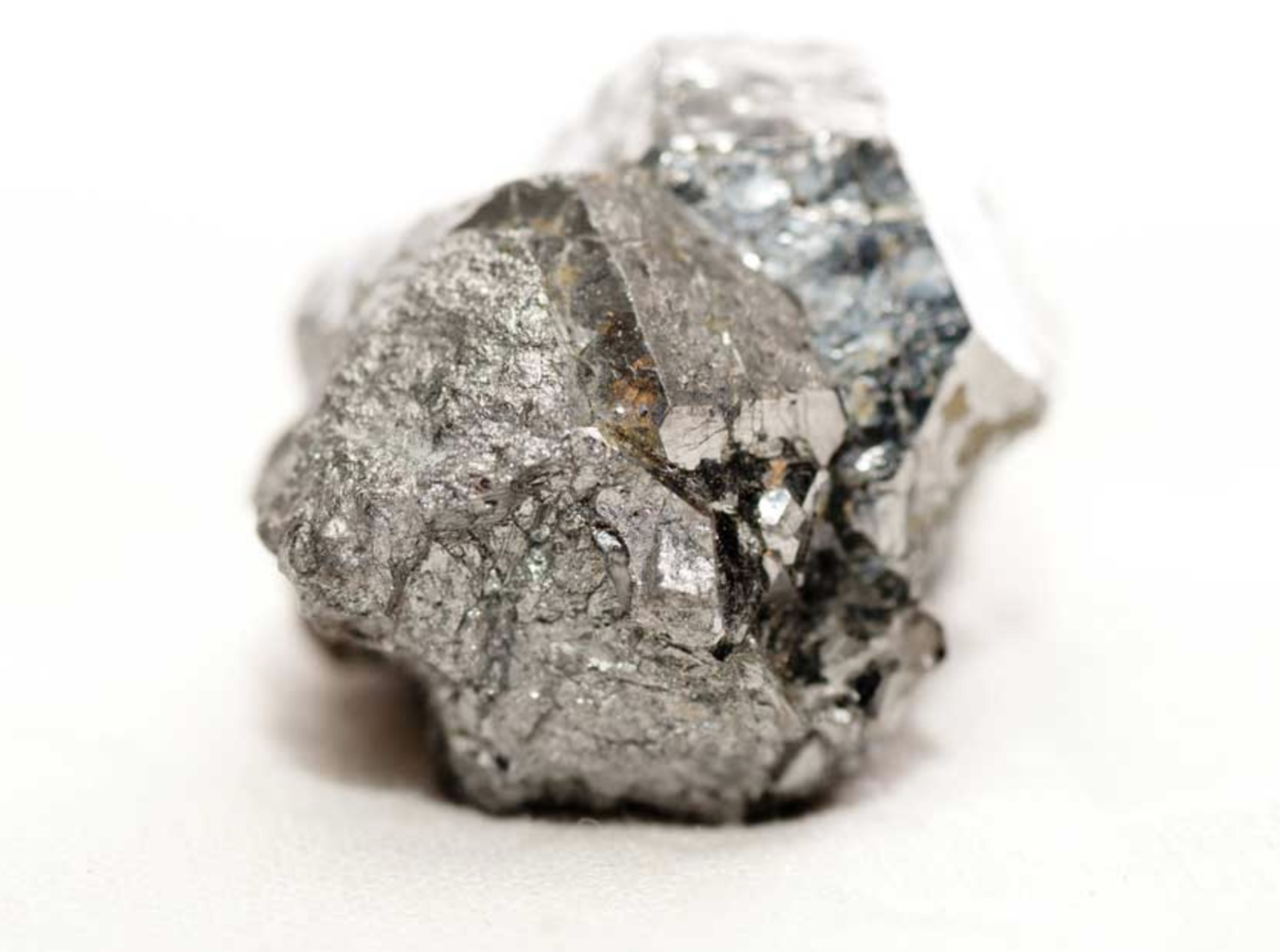
What it is/does: A versatile metal that provides corrosion resistance to steel and is the primary ingredient in high-performance battery chemistries that enable long-range driving.
Level of control: 70% of global output is controlled by Indonesia. The Indonesian government strictly manages this supply through mining quotas and export bans to maintain high global prices.
Main buyers: Stainless steel production and High-Nickel (NCM) battery cells for EVs.
Key buyers: Global steel mills and the EV supply chains of automakers like Tesla and the Volkswagen Group.
#7: Manganese

What it is/does: An industrial element essential for removing oxygen and sulfur during the steelmaking process; it is impossible to produce high-quality steel without it.
Level of control: 70% of the world's high-grade manganese resources are concentrated in the Kalahari Basin of South Africa.
Main buyers: Steel alloying and the production of increasingly popular lithium-manganese-iron-phosphate (LMFP) batteries.
Key buyers: The entire global steel industry (ArcelorMittal, Nippon Steel) and next-generation battery developers.
#8: Platinum Group Metals (PGMs)

What it is/does: A family of six rare metals, including platinum and iridium, that act as highly efficient catalysts for chemical reactions, particularly in cleaning exhaust and producing hydrogen.
Level of control: 80-85% of known global PGM resources are located within a single South African geological formation known as the Bushveld Complex.
Main buyers: Automotive catalytic converters and the ‘green hydrogen’ economy (electrolyzers and fuel cells).
Key buyers: Global automotive OEMs and companies building out the industrial hydrogen infrastructure.
#9: Helium

What it is/does: A non-renewable noble gas with the lowest boiling point of any element, making it indispensable for achieving the ultra-low temperatures required for advanced physics and manufacturing.
Level of control: 40% of the global export market is now controlled by Qatar. As the United States decommissions its historical federal reserves, the world has become geologically dependent on Qatari natural gas byproducts.
Main buyers: Cooling superconducting magnets in MRI machines and rocket engine pressurization.
Key buyers: Healthcare systems, aerospace companies (SpaceX, NASA), and semiconductor manufacturers.
#10: Oil & LNG

What it is/does: These are the primary fuels that power global transport, heating, and industrial electricity generation.
Level of control: 20% of global daily petroleum and liquefied natural gas (LNG) must pass through the Strait of Hormuz. While many countries produce oil, this 21-mile-wide passage is the only exit for the world's most productive energy exporters.
Main buyers: Powering global logistics, power grids, and heating systems.
Key buyers: Energy-hungry Asian economies, specifically China, Japan, India, and South Korea, which are almost entirely dependent on this route.
Supply and demand (and control)
These are 10 macro chokepoints worth knowing about today.
All the resources that make the world go round, must, one way or another, get around the world from their source to their market.
Whether it’s oil, helium, rare earth elements or some other critical — and geographically concentrated — resource, it’s useful to understand the relationship not only between supply and demand, but also between supply and control.
This week's quote:
“He who controls the spice controls the universe.”
— Frank Herbert, Dune
Invest in knowledge,
Thom
The Benchmark
Read more: What if inflation is a feature, not a bug?
Share: If you've enjoyed reading, forward this email to someone you know would appreciate it.
New here? Subscribe to The Benchmark.


